Ghost in S.E.A Culture:
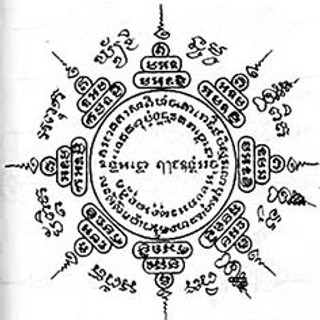
Belief in ghosts in Thai culture is both popular and enduring. In the history of Thailand, Buddhist popular beliefs intermingled with legends of spirits or ghost of local folklore.
Some of the ghosts of Thai culture are shared with neighboring cultures. Krasue, for example, is part of the Cambodian, Lao, and Malay cultures as well. A few of these, including the tall Preta, are part of the mythology of Buddhism. There are, however, others, such as Phi Dip Chin, which have entered Thai ghost lore through the Chinese community residing in Thailand for the past few centuries.Thai spirits or ghosts are known generically as phi (ผี). A large proportion of these spirits are nocturnal. Except for the well-known Preta, most ghosts were traditionally not represented in paintings or drawings, hence they are purely based on oral tradition.There are different categories of ghosts. Certain ghosts dwelling in mountains and forests are generally known as Phi Khao (ผีเขา) and Phi Pa (ผีป่า). Geographic locations such as the Phi Pan Nam Range (ทิวเขาผีปันน้ำ), 'the mountain range that the spirits use to divide the waters', and Phae Muang Phi (แพะเมืองผี) are named after ancient ghosts believed to dwell in these places. Female ghosts or fairies related to trees such as Nang Ta-khian and Nang Tani are known generically as Nang Mai (นางไม้ 'Lady of the Tree').
Some of the most well-known Thai ghosts are the following:
Nang Mai (นางไม้; "Lady of the Wood"), a type of female ghosts or fairies related to trees.
Nang Ta-khian (นางตะเคียน), a tree spirit living in Hopea odorata trees.
Nang Tani (นางตานี), a young woman haunting certain clumps of banana trees that appears on full moon nights.
Kuman Thong (กุมารทอง), spirits of young boys caught by voodoo masters to do his biddings, usually dressed in Thai ancient clothing with a traditional hair bun. Their name derives from the color of their skin, which can be either gold, or pale.
Mae sue (แม่ซื้อ), a guardian goddess or a female ghost of infants.
Hun Phayoon (หุ่นพยนต์), artificial human or non-human. Owners can take advantage of the power of black magic to protect them like Khwai Thanu.
Khwai Thanu (ควายธนู), also known as Wua Thanu (วัวธนู), a magical bull or water buffalo. Most people believe that Khwai Thanu is a black magic that is influenced by Africans who studied Voodoo. Khwai Thanu is popular in southern and northeastern Thailand. Shaman will use dark magic by using Khwai Thanu to attack the enemy. You can call it a devil that destroys everything. Khwai Thanu is used to protect people from dark magic, because Khwai Thanu is a deadly weapon that destroys the enemy. It is hard to break or destroy it with general weapons. The dark magic from Khwai Thanu can be solved by using superior dark magic. Khwai Thanu has deadly magic. Shaman who wants to control it must always be tame. If the shaman does not care about it, Khwai Thanu can return to hurt the owner. To make Khwai Thanu start from the wood to the body structure. Then find the wood that the Undertaker used for the cremation. Wood from cremation must be used from the body that died on Tuesday and the bodies burned on Friday. Such timing can create the most magic of Khwai Thanu. When it comes to wood, bring it to the head, body, horn and tail. Then find a lac on the jujube that special point at the end of the branch pointed east and find the sheet of gold foil that covered the dead body over to lac another layer. Followed by use of a tiny rolled metal amulet between the chest and neck. After completing the body of Khwai Thanu, the most important step of this ritual is to cast spells to it by shaman.
Phi Makphao (ผีมะพร้าว), the coconut ghost.
Phi Pluak (ผีปลวก), the ghost of the termites.
Phi Thuai Khaeo (ผีถ้วยแก้ว), the ghost that makes the upturned glass move (Thai Ouija)
Pu Som Fao Sap (ปู่โสมเฝ้าทรัพย์), a male ghost who guards treasures appearing like a venerable old man.
Rak-Yom (รัก-ยม), appearing as two small boys similar to Kuman Thong.
Mae Yanang (แม่ย่านาง)
Phosop (แม่โพสพ)
Ghosts in Thai culture may be benevolent. Certain ghosts have their own shrines and among these there are some, such as the Mae Nak Phra Khanong shrine in Bangkok, that are quite important. Usually though, humbler tutelary spirits live in little dwellings known as san phra phum (Thai: ศาลพระภูมิ), small ghost shrines that provide a home for these household or tree spirits. These shrines are common near trees and groves and in urban areas, close to buildings. It is considered a bad omen to neglect these spots and offerings are regularly made by people living nearby.Usually offerings to tree spirits are small things such as small food items, drinks, incense sticks or fruits, but when important favors are requested it is common to offer the head of a pig. After the ceremony is over the pig head is brought home and eaten.
The mo phi (Thai: หมอผี; RTGS: mo phi) or 'witch doctor' may invoke spirits of the dead. In this ritual, four sticks are usually planted at equal distance from each other on the ground near the burial or cremation place. A thread is tied around the sticks forming a protective square and a mat is spread in the middle. The mo phi sits down within this enclosure, often along with other people present at the ritual. In front of him, outside of the square there is a mo-khao terracotta jar containing ashes or bones of the dead person with a yantra painted on the outside. Beside the jar there is also a plate of rice as offering and a stick or switch to keep the spirits at bay. On the other hand, there are spirits that are considered dangerous and need to be disposed of. In these cases the mo phi may conduct a ritual in order to confine the dangerous ghost to an earthen jar, which may be sealed and thrown into a deep canal, river or lake.


Comments